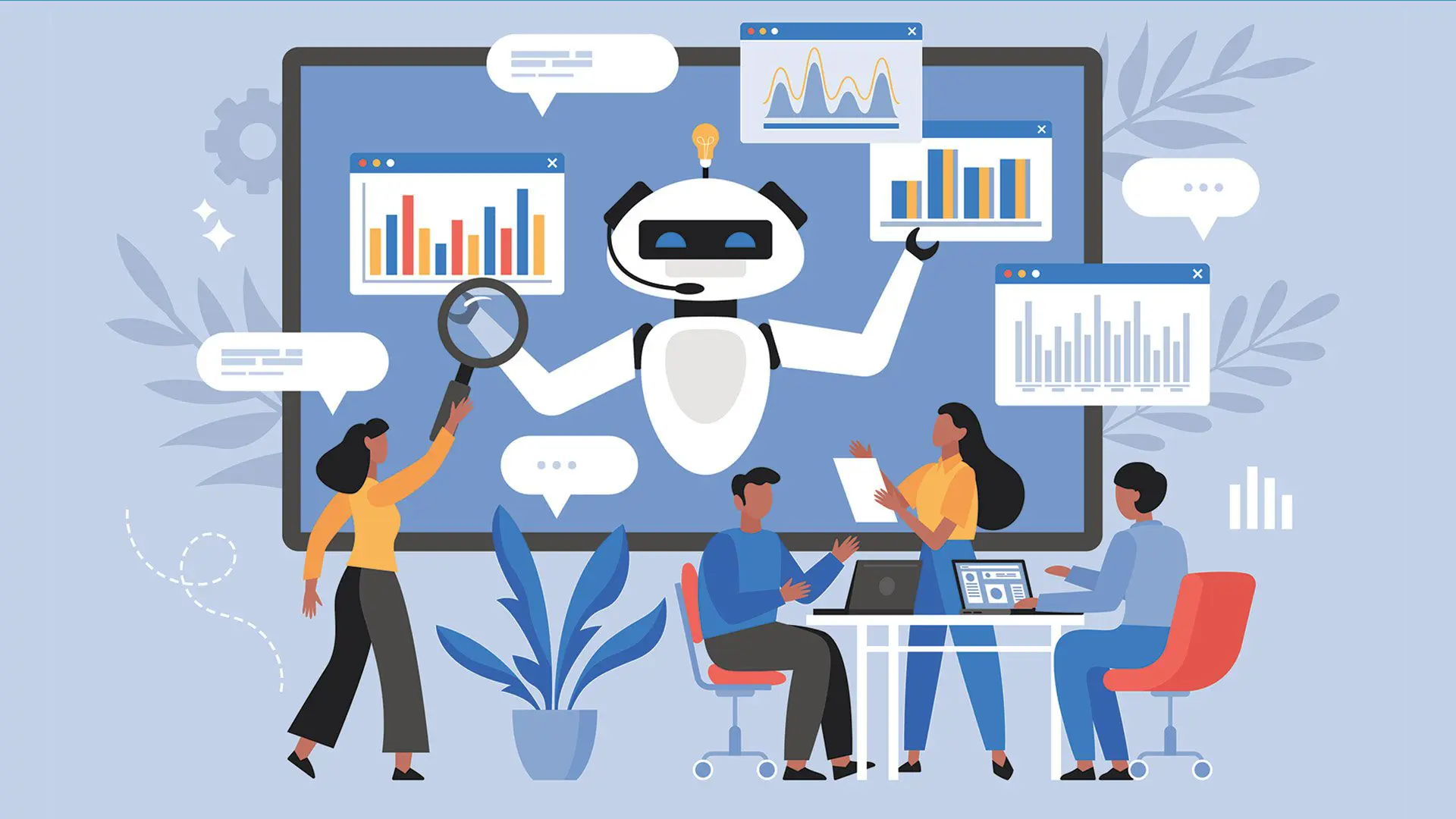
Artificial Intelligence, often called AI, is rapidly becoming part of everyday life across the world. What once seemed like futuristic technology is now being used in offices, schools, universities, hospitals, businesses, and even homes. From helping people organize tasks to supporting students with learning, AI is changing how humans work, communicate, and solve problems.
Many people interact with AI every day without fully realizing it. Voice assistants, recommendation systems, translation tools, customer support chatbots, and smart search engines all use artificial intelligence in some form. In recent years, AI has become even more powerful and accessible, allowing individuals and organizations to complete tasks faster and more efficiently.
The growing influence of AI has created both excitement and concern. Supporters believe it can improve productivity, reduce repetitive work, and make education more personalized. Critics worry about job displacement, privacy issues, and overdependence on technology. Despite these debates, one thing is clear: AI is already reshaping modern workplaces and learning environments in major ways.
The impact of artificial intelligence is not limited to large corporations or advanced technology industries. Students, freelancers, teachers, office workers, entrepreneurs, and small business owners are all beginning to use AI tools in their daily routines. As technology continues to evolve, understanding how AI affects work and education is becoming increasingly important for people of all ages.
How AI Is Transforming Modern Workplaces
One of the biggest changes brought by AI is automation. Many repetitive and time-consuming tasks that once required hours of manual work can now be completed much faster using intelligent software systems. This allows employees to focus more on creative thinking, communication, and problem-solving instead of repetitive administrative tasks.
In offices, AI tools are commonly used for scheduling meetings, organizing emails, analyzing data, and generating reports. Businesses can process information more quickly and make decisions based on detailed insights generated by AI systems. Tasks that once required large teams can sometimes be handled by fewer people with the support of automation tools.
Customer service has changed significantly because of AI-powered chatbots and virtual assistants. Many companies now use automated systems to answer common customer questions, process orders, and provide support around the clock. This improves response times and reduces pressure on human support teams. At the same time, human employees still remain important for handling complex situations that require empathy, judgment, and personal communication.
Remote work has also become more efficient because of artificial intelligence. AI-powered meeting tools can automatically create transcripts, summarize discussions, and organize tasks after virtual meetings. Translation software allows global teams to communicate more easily across different languages, making international collaboration faster and more accessible.
Creative industries are also experiencing major changes. Writers, designers, video editors, and marketers increasingly use AI tools to generate ideas, edit content, and speed up production. Instead of replacing creativity completely, AI often works as a support system that helps professionals save time during repetitive parts of the creative process.
For example, content creators may use AI to generate outlines, suggest headlines, or edit grammar. Graphic designers can use AI-assisted tools to remove backgrounds, improve images, or create design variations quickly. Video editors can automate subtitles and audio cleanup. These technologies help professionals focus more on strategy and storytelling rather than repetitive technical tasks.
Data analysis is another area where AI has become extremely valuable. Companies generate huge amounts of information daily, and analyzing this data manually can be difficult. AI systems can identify patterns, trends, and risks much faster than traditional methods. Businesses use these insights to improve customer experiences, manage supply chains, and predict future market behavior.
Healthcare professionals are also benefiting from AI support. Hospitals and medical researchers use AI systems to assist with diagnosis, patient monitoring, and medical research. While doctors still make final decisions, AI can help identify patterns that improve efficiency and accuracy.
At the same time, AI is creating concerns about job security in certain industries. Some repetitive roles in manufacturing, administration, and customer support may gradually decline as automation becomes more advanced. This has increased discussions about the importance of learning new skills and adapting to changing workplace demands.
Instead of eliminating all jobs, many experts believe AI will mainly change the types of skills employers value. Human abilities such as communication, leadership, emotional intelligence, creativity, and critical thinking are becoming more important because they are difficult for machines to fully replace.
The Growing Role of AI in Education and Learning
Artificial intelligence is also transforming how people study and access knowledge. Traditional education systems often follow the same pace and teaching style for all students, even though individuals learn differently. AI-powered educational tools are helping create more personalized learning experiences that adapt to individual needs.
Students can now access AI-based tutoring systems that provide explanations, practice questions, and instant feedback. These tools allow learners to study independently and receive support outside traditional classroom hours. Many students use AI to clarify difficult concepts, improve writing, or organize study materials more effectively.
Language learning has become more accessible through AI-powered apps and translation tools. Learners can practice pronunciation, receive grammar corrections, and interact with virtual conversation systems. This allows people around the world to learn new languages more conveniently and at lower costs.
Teachers are also using AI to reduce administrative workloads. Grading assignments, organizing lesson plans, tracking attendance, and analyzing student progress can consume large amounts of time. AI tools help automate some of these tasks, allowing teachers to focus more on instruction and student interaction.
Online learning platforms have expanded significantly because of AI technology. Many educational systems now recommend courses based on user interests, skill levels, and learning history. Adaptive learning systems can identify areas where students struggle and provide additional exercises or explanations tailored to their needs.
Accessibility in education has improved as well. Students with disabilities can benefit from speech-to-text software, AI-powered reading assistants, real-time captions, and translation tools. These technologies help create more inclusive learning environments for people with different needs and backgrounds.
Research and academic work have also become faster because of AI assistance. Students and researchers can organize information, summarize articles, and explore large amounts of data more efficiently. AI tools can help simplify complex topics and support brainstorming during projects or assignments.
However, the increasing use of AI in education also raises important concerns. Some educators worry that students may become too dependent on technology instead of developing independent thinking skills. If learners rely entirely on AI-generated answers, they may struggle with creativity, critical reasoning, and problem-solving abilities.
Academic honesty is another major issue. AI writing tools can generate essays, reports, and assignments quickly, creating challenges for schools and universities trying to maintain fair assessment systems. Many institutions are now updating policies and teaching methods to address the growing influence of AI-generated content.
Digital inequality also remains a concern globally. While some students have access to advanced AI tools and fast internet connections, others may lack the resources needed to benefit from these technologies. Ensuring equal access to educational innovation will be important as AI becomes more integrated into learning systems.
Balancing Human Skills With Artificial Intelligence
As AI continues to grow, many people are beginning to rethink the relationship between humans and technology. Instead of viewing AI only as a replacement for human work, many experts believe the future will involve collaboration between people and intelligent systems.
The most successful professionals may not necessarily be those who compete against AI, but those who learn how to use it effectively. Understanding how to work alongside technology is becoming an important skill across industries. Employees who can combine human creativity with AI efficiency often gain advantages in productivity and adaptability.
Critical thinking is becoming more important in the AI era. Artificial intelligence can generate information quickly, but it does not always understand context, emotions, ethics, or human values fully. People still need to evaluate information carefully, identify errors, and make responsible decisions based on judgment and experience.
Communication skills also remain highly valuable. Even the most advanced AI systems cannot fully replace human empathy, negotiation, leadership, or emotional understanding. In workplaces and classrooms, human relationships continue to play a central role in collaboration and learning.
Creativity is another area where humans still maintain strong advantages. AI can generate content based on patterns and existing information, but original ideas, cultural understanding, storytelling, and emotional depth still depend heavily on human imagination. Many industries will likely continue relying on people for innovation and creative direction.
Lifelong learning is becoming increasingly important because technology changes rapidly. Workers and students can no longer rely only on skills learned once during formal education. Continuous learning, adaptability, and curiosity are now essential qualities in a technology-driven world.
Ethics and responsible AI use are also becoming major global discussions. Governments, educators, and businesses are trying to establish rules that protect privacy, fairness, and transparency while encouraging innovation. Questions about data security, misinformation, and algorithmic bias will likely remain important for years to come.
Despite concerns and challenges, artificial intelligence has already improved efficiency and access to knowledge in many ways. People can complete tasks faster, learn more independently, and connect globally with fewer barriers than before. At the same time, maintaining balance between technology and human abilities will remain essential as society continues adapting to the growing influence of AI.
Leave a Reply